Viktor Werner · 6 October 2026
Digital Archives Preserve Regional Dialects Through Crowdsourced Verse Collections
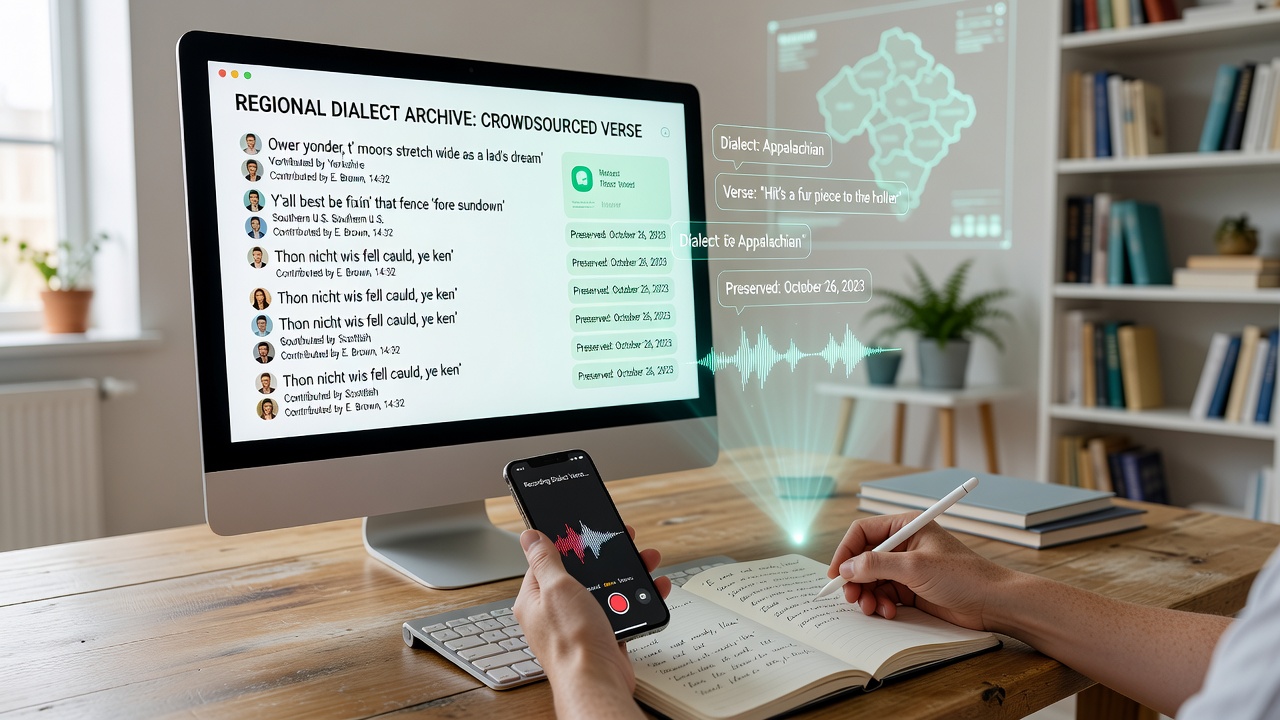
Digital archives have expanded their reach in recent years by collecting verse from contributors worldwide, and this approach captures regional dialects in ways that traditional methods often overlook while communities submit poems, songs, and spoken-word pieces that reflect local speech patterns, vocabulary choices, and pronunciation guides embedded in the text. Researchers track submissions through structured platforms where users upload audio recordings alongside written forms, and these combined elements allow linguists to map phonetic variations across generations.
Mechanisms Behind Crowdsourced Verse Gathering
Platforms dedicated to this work invite participants to share original or inherited verses that incorporate dialect-specific terms, and volunteers review entries for authenticity while preserving original spellings that reveal sound shifts in words like those found in Appalachian or Caribbean English variants. Data from ongoing collections shows thousands of new submissions each quarter, with contributors tagging entries by geographic origin so that search tools can isolate features such as vowel shifts or unique idioms that appear only in certain areas.
Verification processes rely on cross-referencing with established linguistic databases, and project coordinators match submitted pieces against historical records to confirm continuity in dialect usage over decades. This method turns everyday creators into active preservers of language because each verse entry carries contextual notes about usage in daily conversation or ceremonial settings.
Case Examples from Different Regions
One project focused on Scottish island communities gathered verses that highlight Gaelic-influenced syntax in English-language poems, and similar efforts in Australian outback towns collected lines featuring Aboriginal English constructions that blend traditional words with modern phrasing. Observers note that these collections grow steadily because participants often add family stories or local legends written in the exact dialect spoken at home.
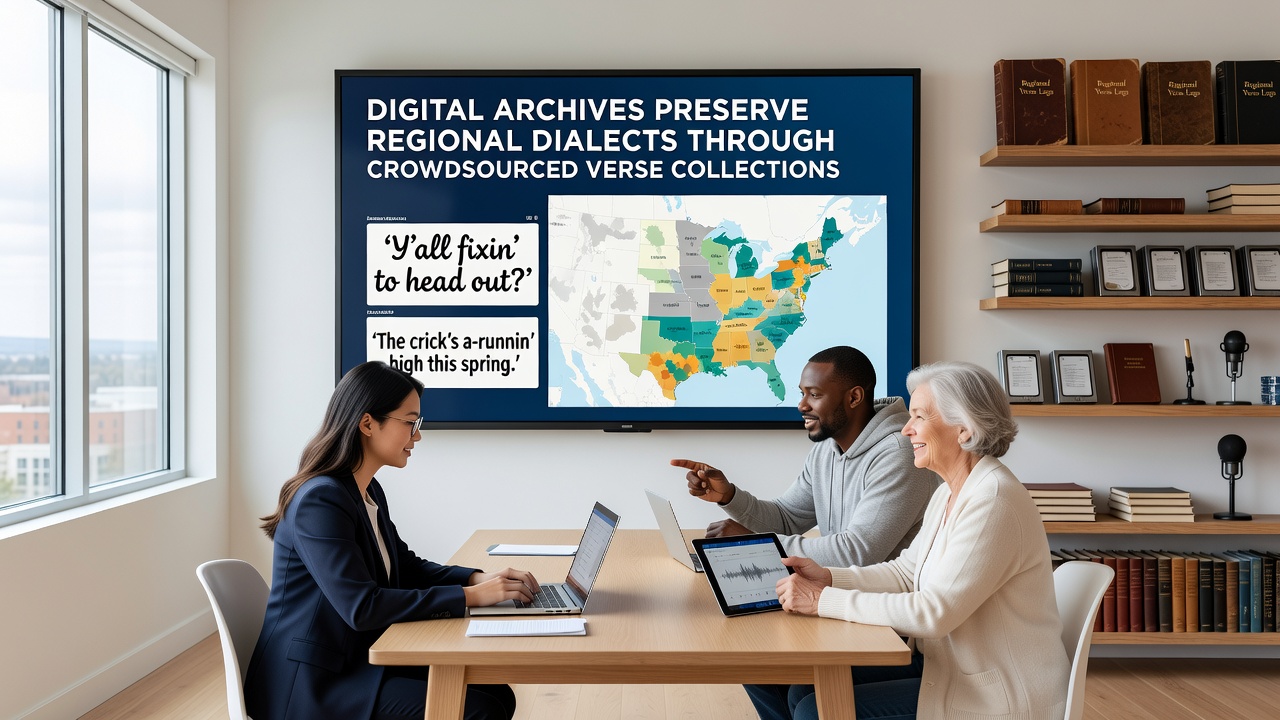
By October 2026 several networks had integrated mobile apps that let contributors record verses on location, and the resulting files include time-stamped metadata that helps researchers correlate dialect features with seasonal or occupational contexts. Studies from institutions in North America and Europe document how such crowdsourced material reveals previously undocumented lexical items that appear in verse but rarely surface in formal interviews.
Impact on Linguistic Analysis and Cultural Records
Academic teams use these archives to build comparative datasets, and algorithms sort entries by phonetic markers so that patterns emerge across large volumes of text and audio without manual transcription of every submission. According to resources at the Library of Congress, crowdsourced verse has supplemented existing sound recordings by adding contemporary examples that show ongoing evolution in regional speech communities.
UNESCO-linked heritage programs have referenced similar collections as models for intangible cultural preservation, while reports from UNESCO digital heritage initiatives highlight how verse archives support education modules that teach younger speakers the nuances of their inherited dialects. Figures from multiple projects indicate that participation rates rise when contributors see their submissions cited in published research papers or featured in community exhibits.
Technical Infrastructure Supporting Long-Term Access
Archivists employ open-source software to handle variable file formats from audio clips to annotated texts, and cloud-based storage systems distribute copies across servers in different countries to guard against data loss. Search interfaces allow filtering by dialect region, contributor age group, or verse theme, which helps specialists isolate variables such as code-switching between standard and regional forms within single pieces.
Training sessions for new contributors explain how to represent pronunciation through modified spelling systems, and these guidelines reduce ambiguity when later users attempt to reconstruct spoken delivery from written records alone. Maintenance teams update metadata standards yearly to incorporate new categories that reflect emerging dialect blends in urban migration zones.
Conclusion
Digital archives that rely on crowdsourced verse continue to document regional dialects through structured collection methods that combine community input with professional oversight, and the resulting repositories supply researchers with layered evidence of language change across time and place. Continued expansion of these efforts depends on sustained participation from speakers who recognize the value of recording their linguistic heritage in verse form.